Technical SEO Services Background

On-Page SEO Services

Your website gets seconds to earn attention. If a page loads, looks fine, but still doesn't rank or convert, the issue is usually on-page.

On-page SEO services are about making each page clear, relevant, and easy to understand—for both users and search systems. That means tighter content, cleaner structure, smarter internal linking, and a page experience that makes visitors take the next step.

If you want to see how we approach SEO overall (process + proof), start here: our SEO approach and case studies.

On-Page SEO Services - Techpullers

What On-Page SEO Actually Means (Simple Definition)

On-page SEO is the work done inside a page to help it perform better in search and drive action.

It includes:

  • page intent alignment (what the query really wants)
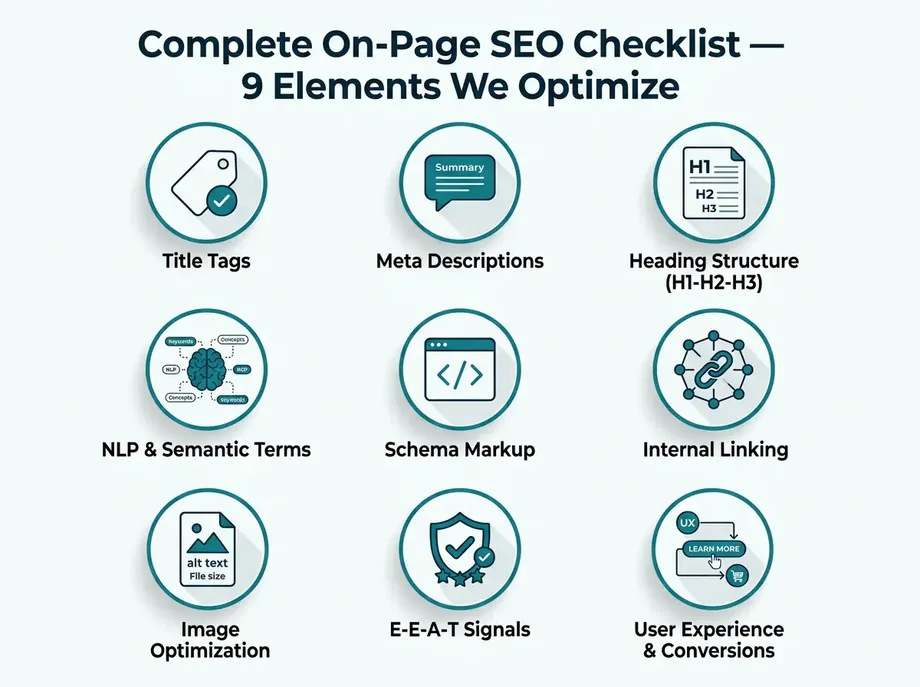
  • title/meta improvements (clickable + accurate)
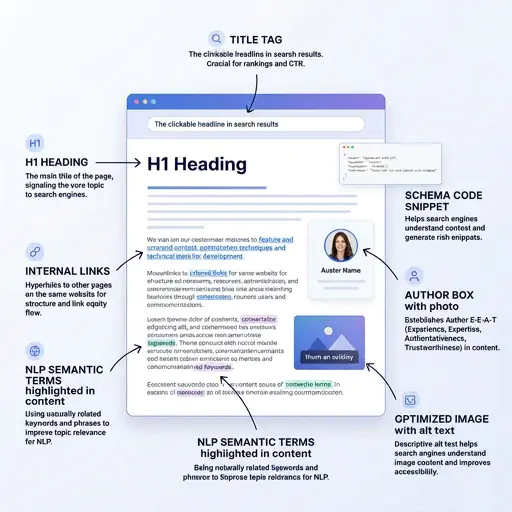
  • clean heading structure (H1 → H2 → H3)
  • content optimisation (clarity, depth, internal consistency)
  • internal linking (so Google understands relationships)
  • image optimisation (alt text + relevance)
  • structured data where it genuinely helps (schema)
  • UX improvements that reduce bounce and increase engagement

Done right, on-page SEO doesn't just "add keywords."

It makes your page the best answer for the query and the easiest choice for the visitor.

Who On-Page SEO Services Are For

On-page SEO is ideal if:

  • you publish content but rankings don't move
  • your pages rank but don't get clicks (poor snippet)
  • visitors land, scroll a bit, and leave (weak structure/CTA)
  • multiple pages compete for similar keywords (cannibalisation)
  • your service pages sound generic (same as every agency)
  • you want more leads without increasing ad spend

Our On-Page SEO Checklist (What We Implement)

This is what our on page SEO services usually include.

1) Keyword & Intent Mapping (Per Page)

We map:

  • primary keyword (one clear target)
  • supporting terms (natural language variations)
  • user intent (informational vs service vs comparison)
  • the exact sections needed to satisfy intent

This is the step that prevents thin content and random keyword stuffing.

Keyword Intent Mapping Per Page Dashboard

2) Title Tag + Meta Description Optimisation

We rewrite for:

  • relevance + clarity (no over-promises)
  • better CTR (click-through rate)
  • clean alignment with page intent
SEO Title and Meta CTR Optimization Preview

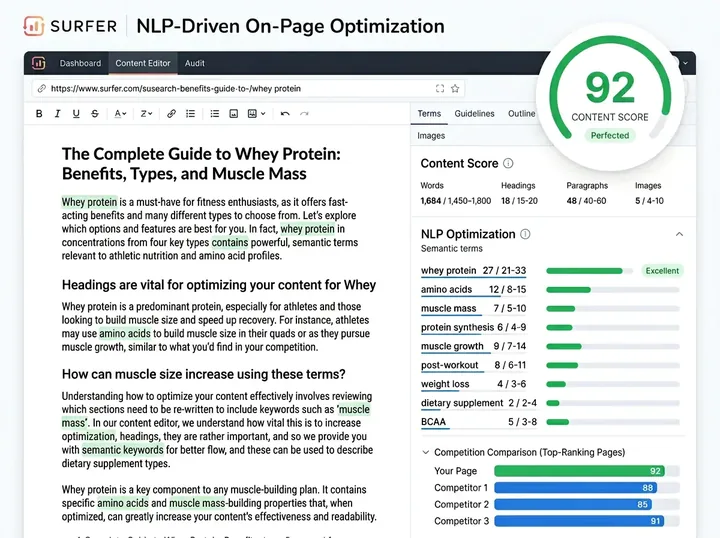
3) Headings & Page Structure (NLP-Friendly)

We restructure pages so search systems can easily extract:

  • what the page offers
  • who it's for
  • how it works
  • proof / trust cues
  • next action

That means:

  • one clean H1
  • logical H2 sections
  • skimmable H3 blocks
  • short paragraphs + bullet points where needed

4) Content Optimisation (Without Losing Your Voice)

We improve:

  • clarity (less filler, more meaning)
  • topical coverage (answer the query fully)
  • readability (scan-friendly)
  • natural term usage (so it reads human, not "SEO-written")

5) Internal Linking & Topical Connections

We build internal links that:

  • guide users deeper (improves engagement)
  • help search engines understand page relationships
  • reduce cannibalisation by clarifying "primary page" vs "supporting page"

6) Image SEO & Media Optimisation

We fix:

  • file naming
  • alt text logic (descriptive, not spammy)
  • compression + size
  • lazy loading where appropriate

7) On-Page UX Improvements (Conversion + Retention)

We optimise:

  • CTA placement (not just at the bottom)
  • trust blocks (proof near decision points)
  • form friction (shorter, clearer)
  • above-the-fold messaging (clear offer + value)
On-Page SEO Elements Dashboard

8) Schema (Only Where It Helps)

We use structured data when it improves clarity/eligibility—examples:

  • FAQ schema (when FAQs are genuinely useful)
  • breadcrumbs (for structure)
  • service schema (when relevant)

No schema spam.

What Makes Our On-Page SEO Different

Most "on page SEO service" providers do the basics: titles, a few keywords, some meta edits—and stop.

We treat on-page SEO as page engineering:

  • the page must satisfy intent
  • the page must be easy to extract and understand
  • the page must guide action

That's why we focus on:

  • structure
  • clarity
  • internal consistency
  • proof placement
  • conversion flow

Ranking is the beginning. Retention + conversion is the result.

On-Page SEO vs Technical SEO vs Off-Page SEO

On-Page SEO

Improves what's inside the page: content, headings, internal links, intent alignment, snippets.

Technical SEO

Improves how the site functions: crawl/index control, Core Web Vitals, canonicals, redirects, architecture.

Off-Page SEO

Improves authority signals outside your site: mentions, links, reputation.

A strong SEO strategy uses all three, but on-page SEO is the layer that makes every page "deserve" to rank.

Our Process (How We Execute On-Page SEO)

Step 1 — Audit (Per Page + Site Patterns)

We identify:

  • what's missing
  • what's repetitive
  • what's unclear
  • what's competing internally
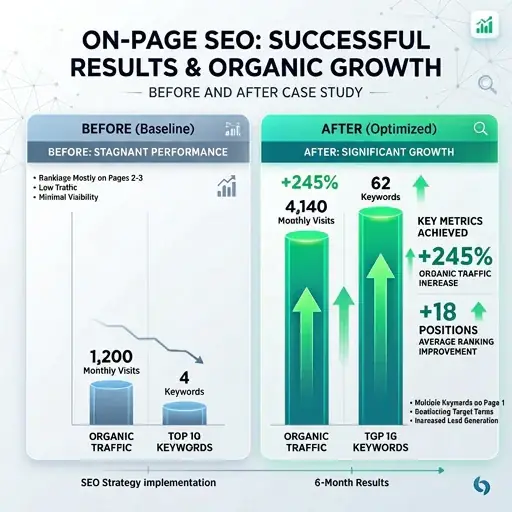
SEO Performance Problem Diagnosis Dashboard

Step 2 — Strategy + Page Blueprint

We define:

  • page goal
  • primary keyword
  • supporting terms
  • required sections
  • CTA flow

Step 3 — Implementation

We update:

  • content
  • headings
  • metadata
  • internal links
  • images
  • schema (if needed)

Step 4 — QA + Tracking

We verify:

  • indexing signals are clean
  • page reads naturally
  • CTA works
  • performance is stable
  • tracking is in place

Step 5 — Reporting

You get:

  • what changed
  • why it changed
  • what we'll do next

On-Page SEO Services for E-commerce (Shopify / WordPress / Custom)

For e-commerce pages, we focus on:

  • product page intent (buyer questions + trust)
  • category structure (filters without index bloat)
  • internal linking between products/categories
  • schema for products (where applicable)
  • content that improves conversion, not just rankings

Pricing & Packages (Simple, Scope-Based)

On-page SEO is scope-based because websites vary:

  • number of pages
  • quality of current content
  • template issues
  • internal link structure
  • CMS limitations

A small site may need a focused optimisation sprint.

A larger site needs a phased rollout with ongoing QA.

If you want, we can share a clear scope after a quick review of your priority pages.

FAQs (Written for Fast Answer Extraction)

On-page SEO services involve improving the content and structure of individual pages—titles, headings, internal links, content clarity, image optimisation, and page experience—so pages rank better and convert more.

Some changes (titles/meta, internal linking, structure) can show early movement in weeks. Larger improvements depend on competition and how much content needs rebuilding.

On-page SEO is page-level optimisation. On-site SEO is broader and includes site-wide structure and technical elements.

No. Keywords are the starting point. The real work is intent match, structure, clarity, internal links, and conversion flow.

Ready to Improve Your Pages?

If your pages feel "fine" but don't rank or convert, the fix is usually not more content—it's better on-page execution.

Our on page SEO services are designed to make each page:

Clearer More Relevant More Trustworthy Easier to Understand More Likely to Convert

We are located in Infopark , Kochi

Our Office